Brand presence, event environment and communications
A presence built before the event began
The African Natural Resources & Energy Investment Summit (AFNIS) is the Africa's biggest stage for mining, mineral development, natural resources and energy, and when GeoScan Technology and Eso Terra arrived at AFNIS 2025, we were responsible for how each organisation showed up. Our job was to make the participation feel connected without making either business disappear inside the other.
We did not treat AFNIS as a single moment. We built the presence around it.
Eso Terra had spent its early years working largely out of view, and AFNIS marked its real introduction to the wider industry. GeoScan Technology was stepping onto a major industry stage for the first time too. Neither needed to make that first impression on a crowded exhibition floor, competing for attention with every other stand in the hall.
In the days leading up to AFNIS, we filmed a series of interview-style videos with the leadership of GeoScan Technology and Eso Terra. The conversations explored where the sector was heading, the forces shaping it, and the work each organisation was bringing to the industry. Released across LinkedIn in the run-up to the summit, the videos introduced the people and thinking behind the brands while giving audiences a reason to start paying attention before AFNIS opened its doors.
This meant the first touchpoint did not happen on the exhibition floor. By the time the summit began, GeoScan Technology and Eso Terra were already part of the conversation.

With decision-makers from across mining, mineral development, natural resources and energy already travelling into town for AFNIS, we moved first: a private Fireside Chat that pulled the evening away from hotel dinners and onto Eso Terra's own turf, the night before the summit opened.
It gave a room of the sector's key decision-makers a closer, unhurried look at Eso Terra: the projects it's running, and where it sees mineral development in the region heading next, delivered by people who'd spent years building quietly rather than making noise about it.
The room carried the introduction
We shaped the environment around the conversation with graphics that introduced Eso Terra and gave key projects a visible role in the room. The design did not compete with the speakers. It made the organisation easier to understand before anyone needed to explain it at length.
The evening created a natural bridge into AFNIS, setting the conversations in motion ahead of the summit.


By the time the summit opened, GeoScan Technology and Eso Terra were already on the radar of industry insiders.
The job was to turn that early momentum into something people would notice on the floor and still remember once they'd left it.
We wanted the booth to feel less like a stand you walk past and more like a room built for a proper conversation.


It also had to do something neither brand had done before: sit together under one identity. GeoScan Technology and Eso Terra needed to read as a single, coherent presence from across the hall, and as two distinct companies once you were standing in front of them.
A deep, near-black blue set the backdrop, dark enough to hold attention without competing with the work on display. White furniture kept the space feeling open rather than crowded, and a semi-enclosed wooden section gave people somewhere quieter to talk business away from the noise of the floor.
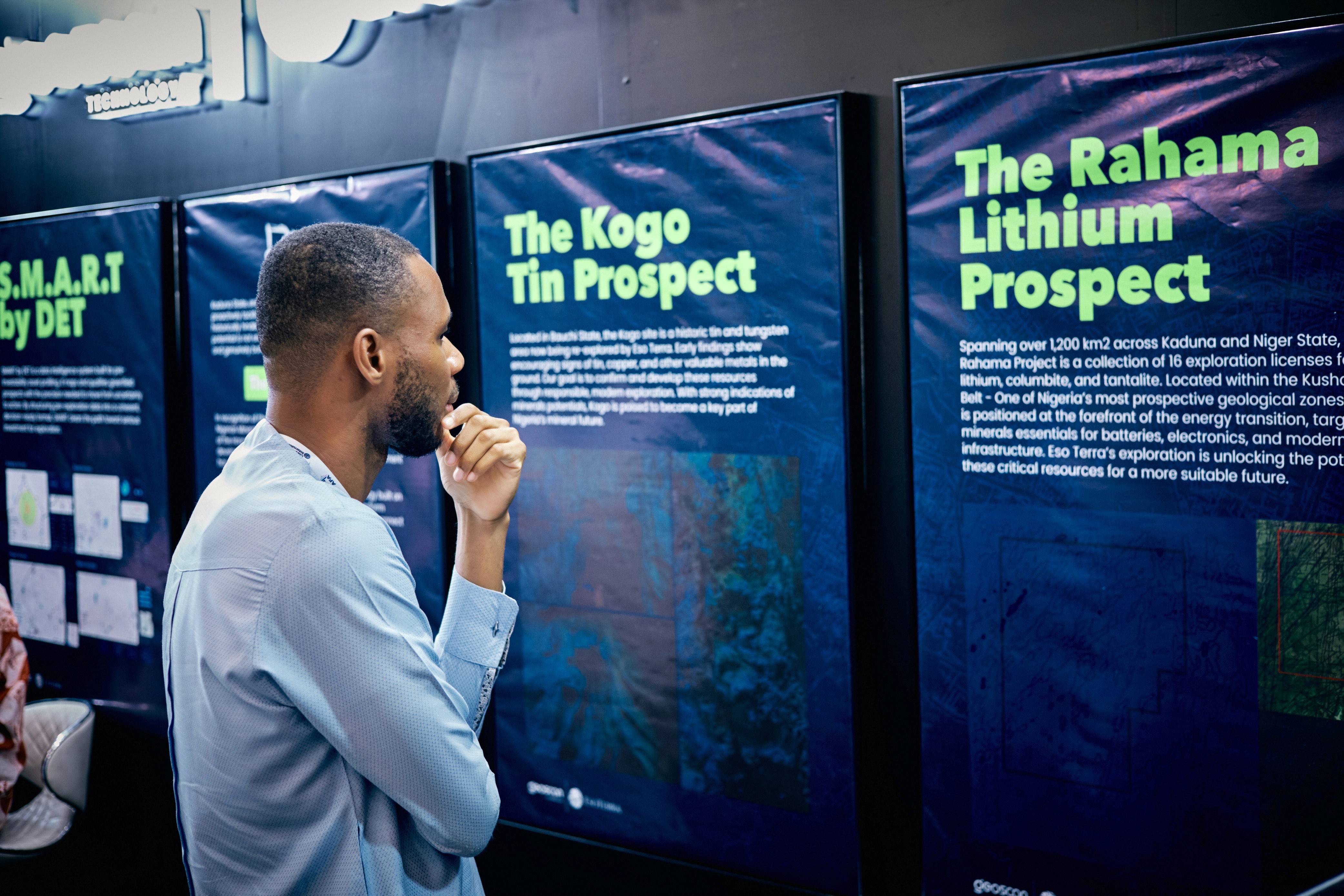

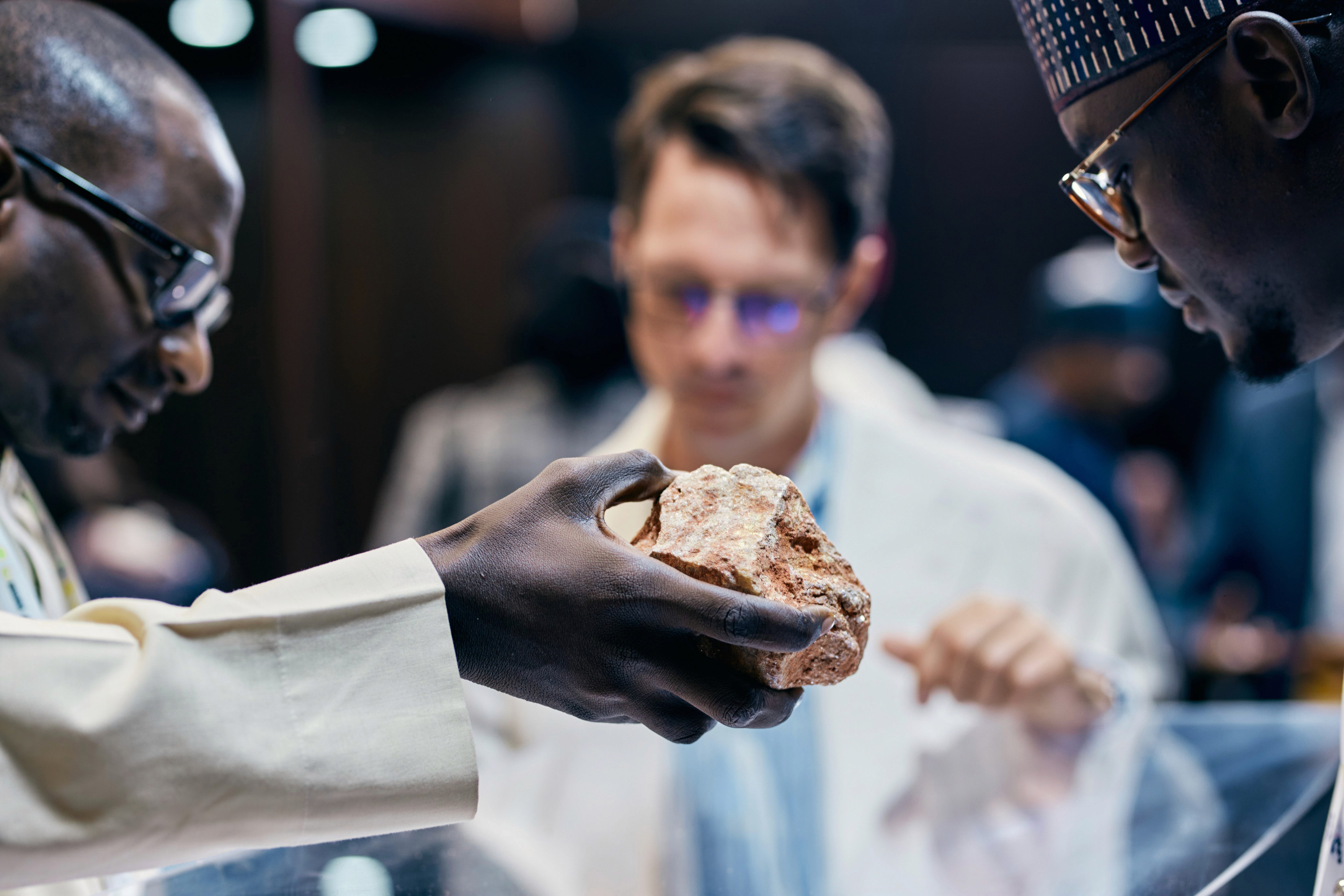
Project posters ran through the space as an information layer, something for visitors to actually read, while doing double duty as part of the booth's visual character. We also included a glass display held rare minerals from the sector itself, the kind of detail that turns a stand from a marketing exercise into something worth touching.

QR-enabled pamphlets linked straight through to each company's profile, and LinkedIn codes gave people a second way in, for those who'd rather scroll later than read on the spot.
Good coffee at a mining summit isn't a small thing, and we made sure of it.
Scan the code,
follow the page,
then help yourself to a coffee or tea.
It turned out to be one of the more effective ways of drawing people into the stand, and because the cups were branded, the exchange carried on past the booth, into meeting rooms and back to hotel desks.

We documented the event as it happened: booth conversations, side discussions, panels, speeches, roundtables, all of it.
LinkedIn kept the conversation moving in real time.
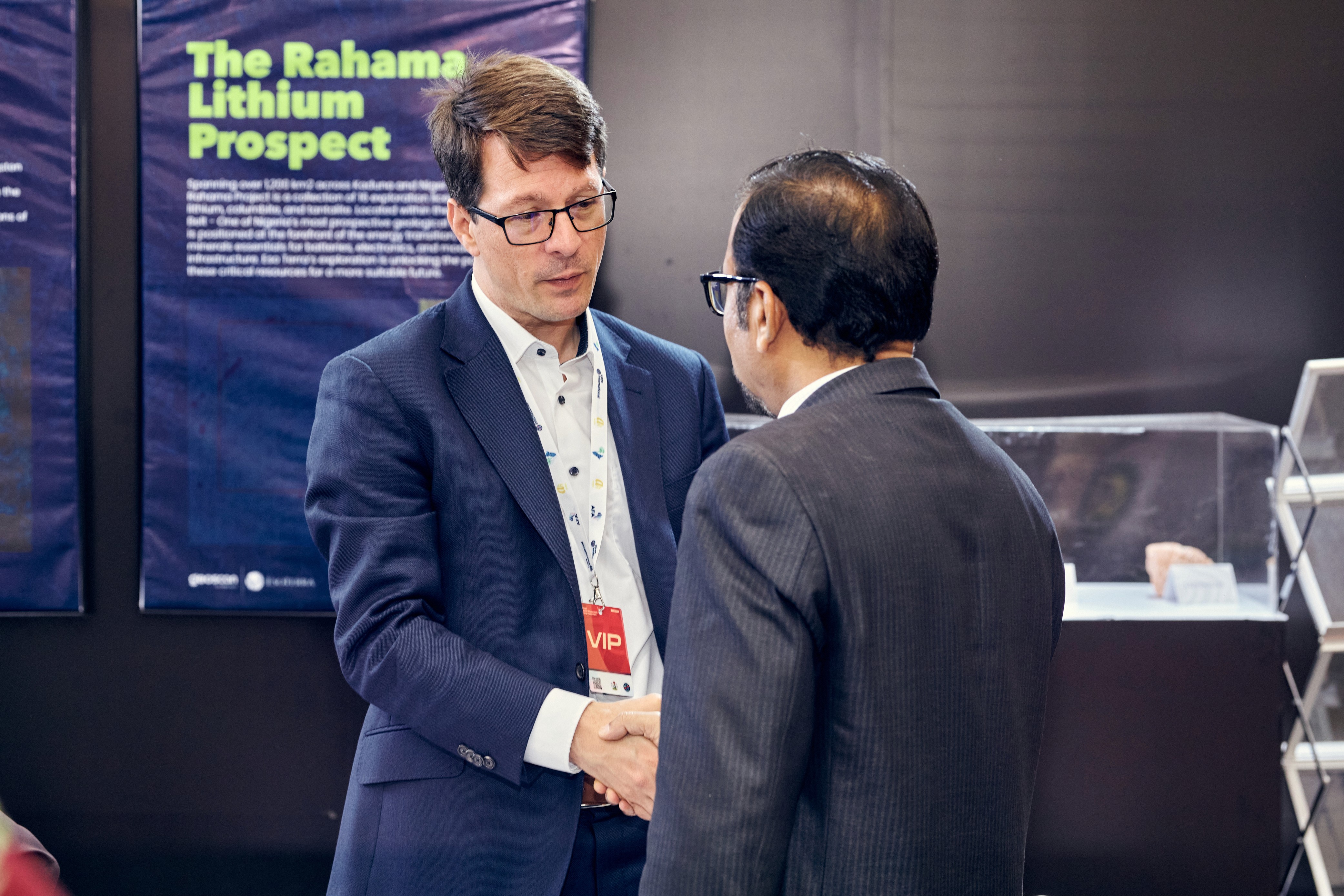

Event newsletters followed up on the conversations and connections made during the summit.
A roundup video brought the event back to LinkedIn, and further footage moved onto YouTube, giving the material a longer life than the four days of the summit itself.

The Fireside Chat, the booth, the social content, the follow-up: none of it was built to stand alone. Each piece was designed to hand off to the next, so the presence held together as one continuous piece of work rather than a set of separate deliverables.
GeoScan Technology and Eso Terra came to AFNIS for four days.
The work we built around them ran for weeks on either side of it.
NEXT PROJECT
VIEW PROJECT